
How to Focus Your D.C. Degree
A Doctor of Chiropractic degree qualifies you to practice broad-scope, whole-body care from your first day in practice, but some Palmer graduates choose to pursue postgraduate training that deepens their expertise. Specializing lets you build a distinct professional identity, work with a specific population or condition, and contribute to where chiropractic care is headed next.
How Specializing Works
Most chiropractic specializations are earned through a diplomate credential: additional postgraduate coursework, clinical hours and a board exam administered, completed after you earn your D.C. degree.
Some specialties, like chiropractic rehabilitation and chiropractic radiology, are pursued through a formal three-year residency. Others are built through continuing education programs completed while you’re already in practice. Either route builds on your core D.C. training. Chiropractic certifications and diplomate programs build on the D.C. degree through postgraduate coursework, clinical experience and, depending on the specialty, board examination or residency training.
Palmer’s D.C. program includes elective coursework, clinical rotations and faculty mentorship across specialty areas, giving you early exposure to different focuses before you have to choose one.
Explore Chiropractic Specialties

Sports Chiropractic
Sports chiropractors care for athletes and active patients, focusing on injury prevention, on-field assessment and return-to-activity care. Many work alongside athletic trainers and sports medicine teams, and Doctors of Chiropractic serve on staff with professional and Olympic-level programs, making this a natural fit for students who want hands-on, performance-focused work.
Chiropractors who work with athletes can deepen their learning by pursuing postgraduate coursework leading to the Certified Chiropractic Sports Physician (CCSP) credential, with the Diplomate of the American Chiropractic Board of Sports Physicians (DACBSP) as the advanced credential. The path starts with coursework toward the CCSP credential, with the DACBSP as the advanced credential. Palmer’s sports chiropractic clinical experiences and electives give students early, hands-on exposure to this specialty well before they graduate.
Chiropractic Rehabilitation
Rehabilitation-focused chiropractors emphasize active care: functional movement restoration, exercise prescription and co-managing patients recovering from injury or surgery. It suits students who want to blend chiropractic adjustment with exercise-based, functional care, treating rehabilitation as a natural extension of chiropractic rather than a separate discipline, focused on restoring the movement patterns patients need to return to daily life, sport or work.
Palmer’s three-year post-graduate rehabilitation residency is the longest-standing chiropractic residency program in the profession. Residents train in an interdisciplinary clinical setting, applying evidence-informed methods, and the residency offers a direct, structured route to the Diplomate of the American Chiropractic Rehabilitation Board (DACRB). For graduates seeking structured postgraduate training in chiropractic rehabilitation, Palmer’s three-year residency provides a direct path toward DACRB eligibility.

Pediatric Chiropractic
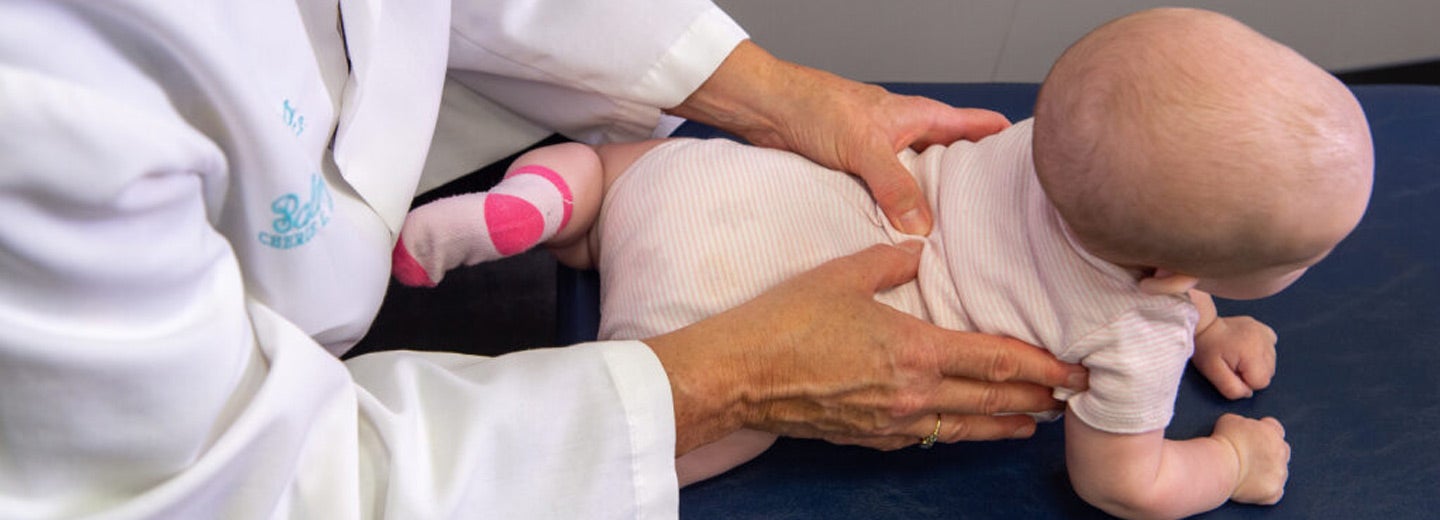
Pediatric-focused chiropractors care for infants, children and adolescents using age-appropriate, lighter-force techniques, supporting healthy movement and development through key growth milestones. Students drawn to family-centered, developmental care often find this specialty a strong match.
Chiropractors typically pursue it through continuing education after graduation, working toward the Diplomate in Clinical Chiropractic Pediatrics (DICCP) while already in practice. Pediatric chiropractic certification is pursued through postgraduate continuing education, with the DICCP representing an advanced specialty credential. Palmer’s elective coursework and faculty mentorship give students an early look at this path long before they pursue the credential.

Chiropractic Radiology
Chiropractic radiologists specialize in interpreting diagnostic images, including X-ray, MRI, ultrasound and CT scans, often serving as a consulting resource for other chiropractors and care teams. Students with an interest in diagnostics and image-based problem solving tend to gravitate here, drawn to the precision the role demands and the responsibility of guiding another doctor’s care decisions with a confident, accurate read.
Palmer’s three-year post-graduate radiology residency, based in the College’s Clinic Radiology Department, prepares graduates for advanced work as a chiropractic radiologist and progression toward the DACBR credential. Residents work directly with faculty radiologists on real patient cases, and the residency prepares graduates for the Diplomate of the American Chiropractic Board of Radiology (DACBR), a credential that marks them as a trusted source within any care team they join.
Chiropractic Neurology
Chiropractic neurologists apply brain-based rehabilitation approaches to assess and care for patients with complex neurological and functional conditions, an area of growing interest as demand for non-drug neurological care expands. It’s a fit for students interested in the nervous system and complex, non-drug care.
Students interested in chiropractic neurology can pursue postgraduate education leading toward the Diplomate of the American Chiropractic Neurology Board (DACNB) credential and focused work as a chiropractic neurologist. Palmer’s elective coursework and faculty mentorship give students an early look at this path long before they pursue the credential.

Chiropractic Orthopedics
Chiropractic orthopedists focus on evaluating and caring for complex spinal conditions, joint issues and work-related injuries, often taking on consulting or independent examination roles. Students who want advanced diagnostic and case-management expertise are well suited to this path.
It’s earned through postgraduate study after graduation, leading to the Diplomate of the American Chiropractic Board of Orthopedics (DACO). Palmer’s elective coursework and faculty mentorship give students an early look at this path long before they pursue the credential.
Clinical Nutrition
Chiropractors who specialize in clinical nutrition apply nutrition science to support whole-body health and chronic disease prevention alongside chiropractic care, often within an integrative or wellness-focused practice. It appeals to students building a practice around integrative, whole-person wellness. Chiropractic nutrition can become a focused area of practice through postgraduate coursework and chiropractic nutrition certification leading toward the Diplomate of the American Clinical Board of Nutrition (DACBN) credential. Palmer’s elective coursework and faculty mentorship give students an early look at this path long before they pursue the credential.
Your Path to Specializing
Specializing isn’t a single decision. It unfolds in stages across your Palmer education and career. Chiropractic residency programs offer the most structured route for select specialties, while other credentials are completed through postgraduate coursework and continuing education.
- During your D.C. program, elective courses, clinic rotations and faculty mentorship expose you to different specialty areas before you graduate.
- After graduation, some specialties, like rehabilitation and radiology, offer a structured, three-year residency at Palmer. Others are pursued through continuing education once you begin practicing.
- Many chiropractors add a specialty years into practice, once they have a clearer sense of the patients and conditions they most enjoy caring for.
Ready to Explore Your Focus?
Talk to an admissions counselor about how Palmer’s electives, clinical rotations and residencies can support the specialization you’re considering, or request more information to get started.
FAQ: Chiropractic Specialties and Certifications
Do all chiropractors specialize?
No. Specializing is optional. A D.C. degree qualifies you to practice broad-scope care without any additional credential. A specialization is an added focus some chiropractors choose to pursue.
When do chiropractors typically choose a specialization?
Most choose after graduation, once they’ve started practicing and have a clearer sense of the patients or conditions they enjoy working with most. Electives and clinic rotations during the D.C. program can help you start narrowing it down earlier.
Does Palmer offer a residency in every specialty?
Palmer offers formal three-year post-graduate residencies in chiropractic rehabilitation and chiropractic radiology. Other specializations, including sports, pediatric, neurology, orthopedics and nutrition, are pursued through postgraduate coursework and board certification after graduation.
Can I pursue more than one diplomate?
Yes. Some chiropractors hold more than one specialty credential over the course of a career, though most focus on one at a time given the time investment involved.