Palmer College of Chiropractic legends are not only the famous names in chiropractic history. They are the teachers who knew every student by name, the clinicians who set a standard for patient care, and the mentors whose lessons stayed with students long after graduation. But what exactly makes a Palmer educator an icon?
Past and present faculty have answered the question. Allow us to introduce you to a few Palmer graduates carrying the legacy forward, and the teachers who inspired them along the way. (And be sure to let us know who you think deserves “legendary” status.)
Generations of Impact
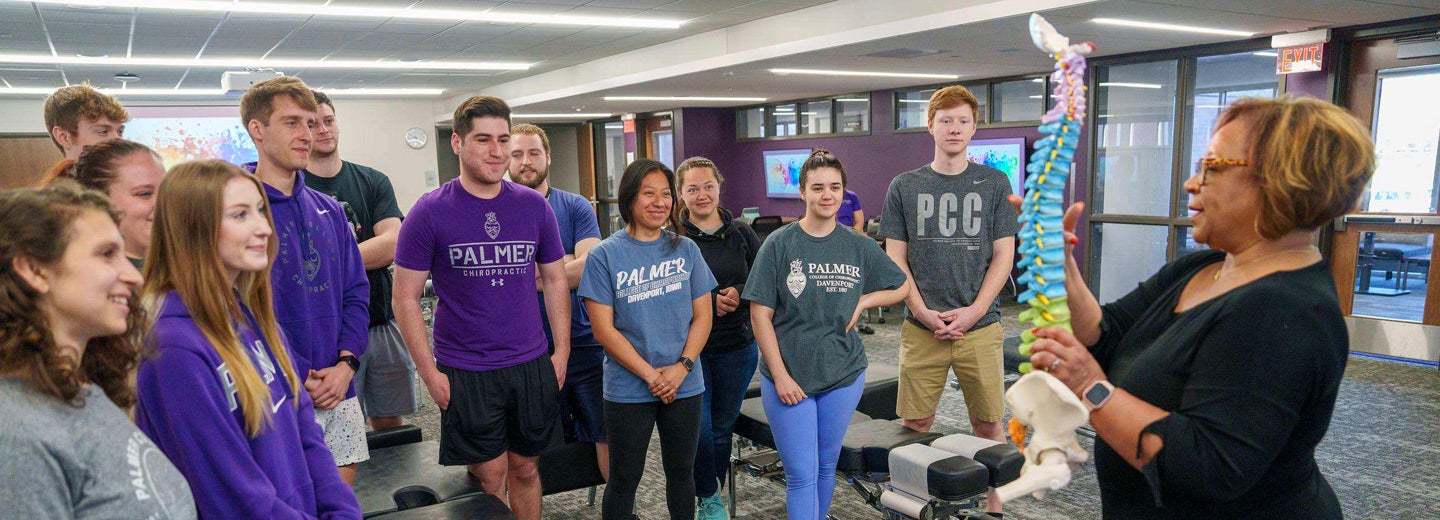
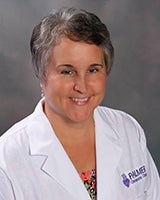 Cherie Marriott, D.C. (`86), sees it happen every trimester. A student arrives in the clinic nervous and uncertain, perhaps unsure of what to say to a patient or tentative with their hands. “By the end, they stand a little taller,” Dr. Marriott says. “Their communication is more natural. Their technique is more confident. They have begun to see themselves not simply as students learning chiropractic but as Doctors of Chiropractic preparing to serve. They transform before our eyes. I love being a part of that.”
After 36 years at Palmer College of Chiropractic, she still finds that transformation energizing. So does Steven Cuono, D.C. (`00), who has spent two decades teaching at Palmer. For both, the enduring appeal of teaching is being around people who want to learn.
“It’s a positive community,” says Dr. Cuono, who teaches on the Florida campus. “You’re working with people who want to push themselves and serve patients.”
That spirit is also part of what has kept Dr. Marriott at Palmer for more than three decades, a period of considerable change. “Technology has changed the look of our classrooms and clinics, health care has evolved, and we’ve expanded our approach to patient care. I’ve been lucky to see the College — and our faculty — grow and evolve.”
What remains constant is the relationship between students and the people teaching them. In the Davenport clinic where she teaches, Dr. Marriott believes some of the most important lessons happen without a lecture. Students watch how she talks with patients, how she puts them at ease, how she touches and evaluates them. She wants them to see the kind of doctor she hopes they will become. “It’s a lot of modeling the behavior you want students to emulate,” she says.
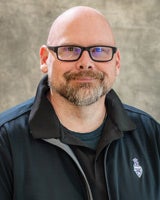 Dr. Cuono takes a similar approach. Teaching chiropractic philosophy and history as well as theory means he has students for much of their first year, giving him time to know them as individuals. “Our campus is designed in a way that allows faculty and students to regularly cross paths,” he says. “My office door is open. Students come in with one question, and it often leads to a deeper conversation. I value the trust they put in me and our entire faculty.”
He now has graduates he communicates with regularly who once came to him for advice. After 10 or 20 years in practice, some have become trusted colleagues whose experiences he can learn from, too. “I look at our students as future colleagues,” Dr. Cuono says. “That level of respect is key to how we support students.”
As a pediatric clinician, Dr. Marriott treats children who later become Palmer students themselves. She laughs when she describes herself at this stage of her career as a “chiropractic grandma,” with former students now practicing across the country. “It’s a unique pleasure to hear from past students,” she says. “I follow their careers and take pride in knowing I played even a small role in their lives.”
For both professors, Palmer is a community of people who share a commitment to chiropractic, to learning, and to one another. Neither talks about teaching as merely a job. “Palmer is home,” Dr. Marriott says. “It’s where I’ve grown and thrived; it’s a place where my values and interests are valued and rewarded. I try to pay that back to our students every day.”
The Teachers Behind the Teachers
We all have a teacher whose advice stays with us long after we leave the classroom: the teacher who took a little extra time, asked the right question, saw something in us we hadn’t yet seen in ourselves, or simply showed us what it meant to care deeply about the work.
Teri Payton Dexter, B.A., D.C. (`86) on what she learned from Henry Brockington, D.C.
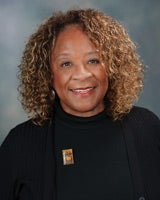 Teri Payton Dexter, B.A., D.C. (`86), remembers Henry Brockington, D.C., who taught endocrinology during her years as a Palmer College of Chiropractic student. Dr. Brockington knew his subject “backward and forward,” but what she remembers most is how he made students feel.
“He had this great east coast accent,” she recalls. “He was really supportive to us, and his wife, Dr. Yvonne Brockington, was vice president for student affairs, in charge of student counseling. They set a great example. Students could sit with Dr. Brockington, ask questions, and know they would be taken seriously.”
That example stayed with Dr. Payton Dexter as she moved from student to clinical teaching resident and eventually into a teaching career spanning Palmer’s Iowa and Florida campuses. Over nearly four decades, she has taught thousands of students, carrying forward the same sense of curiosity and care she experienced from her own instructors.
“I learn from my students as much as they learn from me,” she says. “You really get to know students. You can tell when something is off.”
For Dr. Payton Dexter, that attentiveness is part of what it means to teach. Students, like patients, need to know they are seen, heard, and respected. Creating that kind of environment gives them the confidence to ask questions, remain curious, and keep learning.
“I want them to know that patients arrive carrying a history that may not be visible at first glance,” she says. “Being creative, asking questions, and listening — that’s how we bring competence and compassion together for the good of our patients. As instructors, we can set that example and expectation. That’s what great teachers like Dr. Brockington did.”
Peggy Sherman Cochran, D.C. (`82) on the lessons she took from Terri Baltes, D.C. (`75)
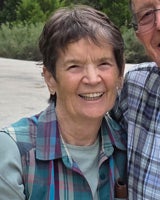 For Peggy Sherman Cochran, D.C. (`82), Terri Baltes, D.C. (`75), embodied the kind of teacher she would strive to become. Small in stature but formidable in knowledge, skill, and expectations, Dr. Baltes taught chiropractic philosophy at Palmer, maintained a busy Davenport practice and became a mentor and friend. When she invited Dr. Sherman Cochran to work in her practice one summer, it became clear how those qualities came together.
“She was one of the best adjusters I’ve ever been around,” Dr. Sherman Cochran says. “She was very strong in her philosophy, and she never let up about what she expected us to know. Seeing her teach and then seeing her practice, I realized how much those things go together.”
Dr. Baltes’ influence went beyond what happened at the podium or in the adjusting room. She showed that rigor matters and that a deep understanding of chiropractic philosophy, high standards, and a commitment to doing things well ultimately serve both students and patients. Her example gave Dr. Sherman Cochran a model for bringing those same expectations into her own career. It also created a bond. Long after retiring, despite living time zones apart, the two maintain a friendship through daily texts, emails, or phone calls.
After graduating from Palmer, Dr. Sherman Cochran returned to California, where she taught at Palmer West and established a practice of her own. For 18 years, she practiced alongside her husband and fellow Palmer graduate, Fred Cochran D.C. (`87). She invited students into her office, encouraged them to seek out mentors, and held regular health care discussions for patients because she believed chiropractors have a responsibility to teach people not only what they do, but why.
“I think it’s very important for everybody, regardless of what you do, to come at it as a mentor to help others,” she says. “You never know who you are impacting with your words and practice, and you never know where great new ideas and inspiration will come from. Stay curious.”
The Making of a Palmer Icon
What makes someone a Palmer icon? Michael Tunning, D.C., M.S., ATC. (`06), dean of programs and former faculty senate president, has decades of experience supporting Palmer leaders. He says it’s not one achievement, title, or years on campus, but how someone shows up for patients, students, the profession, and College.
1. Rigor and precision
It starts with a commitment to doing things well and for the right reason: providing the highest quality care for our patients. For our students, that’s time in the classroom, labs, and clinic developing knowledge, discipline, and judgment. For faculty, it’s our responsibility to continually improving how we teach.
2. Care that starts with listening
Everything starts with the patient. A Palmer icon brings creativity, intelligence, clinical skill, and empathy to the person in front of them — but first, they listen. Ultimately, the best care comes from the partnership we build with patients.
3. A deep sense of philosophy
Palmer graduates understand the importance of the art, science, and philosophy of chiropractic. For more than 125 years, Palmer graduates have championed the fundamentals of health and wellness. We have a responsibility to be well, and that sense of accountability matters.
4. Curiosity and growth
I still think about something said to me at my own graduation: “One’s mind, stretched by a new idea, can never return to its original dimension.” That captures the Palmer experience. There’s a curiosity and energy on campus that makes these some of the most memorable years of your life.
5. A sense of belonging
At Palmer, we learn alongside our classmates, faculty, and clinicians who become part of our story. Our shared experiences create a connection that’s built on campus and continues throughout a career.
6. Palmer pride
Our alumni show students what is possible. They build practices, care for generations, serve communities, conduct research, teach and lead the profession. That is Palmer pride — continuing to build our history.
7. A willingness to lead
An icon shows the way. Leadership is the willingness to step forward, serve others, and leave something better than you found it. I see that potential in our students and young faculty. Palmer’s next icons are already here.
8. Giving students a hand up
One of the most meaningful things alumni can do is reach back and help students coming after them — through mentoring, clinical opportunities, sharing lessons from practice, or simply offering encouragement. We all remember those who helped us find our way. Eventually, we can become that person for someone else.
9. Coming home
Nothing beats Homecoming. Alumni return to reconnect with classmates, faculty and the place that shaped their lives. They bring their experiences back, giving students a glimpse of Palmer’s strength and reach. It reminds us that graduation is not the end of their Palmer journey.
10. Giving back
Philanthropy at Palmer supports scholarships, faculty, classrooms, technology, clinical training, and student experiences. It is an investment in the next generation of chiropractors, and a way to give today’s students what someone once gave you.